
Goal
Find & test new value prop
Timeline
1 week sprint
Team
CX, UX (myself), PM
Context
The original product intention was to create a world where people buy from people, instead of traditional, impersonal channels such as big-box retail stores. By eliminating customer acquisition costs (CAC), brands would pay users for sharing products that led to sales.
Users were onboarding, creating stores, adding products, writing comments and sharing stores. 👍
Virtually no sales. Nor were users sharing the app. 👎
Team composition: Customer Experience lead, UX Designer (myself), and Product Manager working in close collaboration to identify and test a new value proposition for the platform.
Output: Clickable mobile-web prototype delivered within a 1-week sprint.
The Problem
Through weekly user interviews conducted by CX and myself, we discovered critical issues:
- •It feels "icky" selling to friends
- •Average price point was too high
- •Sharing the app was perceived as increasing competition
*Participants were all sellers. We knew this was an issue and tried very hard to find users or our target demo to speak to. We needed to hear from the buyers.
Existing Product Issues
Before diving into new value propositions, we identified critical UX friction points in the existing product:
- —Discoverability problems: Hard to find items and correct sizes
- —No cart functionality: Users couldn't even add multiple items
Research & External Data
Pulling as many retail reports as we could find, we heard Gen-Z say they care about social causes.
Key Take-aways:
- →The growth strategy wasn't working
- →Can't wait for BD to add every brand under the sun
- →We may not be able to convince BD to abandon their cool, premium-brands first approach
- →Given that our existing product already had a social-cause element, we felt perhaps it wasn't clear enough
Design Exploration
I referenced as many other sites as I could find that linked their products to a social cause for inspiration. As a team, we generated many ideas and talked about all of our assumptions. As crazy as it sounds, maybe money wasn't motivation enough. This was the first time as a company we challenged this core assumption.
Three Design Directions

Version A
"Now the responsible thing is also the easy thing" — sustainability badges (Cruelty Free, Sustainable, Fair Trade, Vegan) prominently displayed on each product.
Version B
"Good Jeans / Good On You" — bold typographic cause overlays highlighting the social impact of each product purchase.
Version C
"Our Mission — Ethically Made Products" — mission-first homepage approach putting social impact at the center of the narrative.
Prototype Features
Product Education
Each product clearly shows the discount applied and the cause it supports, making the value proposition tangible and transparent.
Social Proof & Direct Impact
Real-time feed showing what others bought and the concrete outcomes: "Margo Bell — 20 meals to families in need" demonstrates tangible community impact.
Cause Selection at Checkout
Users choose where 10% of their purchase goes: Australian Wildlife Conservancy, Fuck Cancer, Feeding America, Clean Air Task Force, Conservation International, or One Tree Planted.
Broadcasted Purchases
Full-page flow showing cause selection, educational messaging, and the "Just Bought" social proof feed. Every element reinforces that impact is built into the purchase.
Testing & Learnings
Testing Setup
10 remote participants. Compared our prototype to competitors. Tasks included: find a product, add to cart, checkout.
Key Learnings:
- ✓Users were delighted by the fun messages for deciding how to share their earnings!
- •When asked about the broadcasted purchases, users said they were unlikely to share purchases on social media platforms, saying they were more likely to share on Storr. A couple of users mentioned they would be uncomfortable sharing the fact they bought $500 shoes.
- •Those who recognized the ability to choose where some money goes, all drew a comparison to Everlane's "choose your own price".
- ✗Everyone else felt it was complicated, didn't understand where the money was coming from and why 3 parties were involved.
Outcome & Reflection
The existing product served an MLM use case that became increasingly clear through this research. Our findings pointed toward pivoting to new-mom communities (Reddit/Facebook groups) where product recommendations hold real value. We identified a passionate new-mom blogger excited about building something useful for that community first, before scaling.
Ultimately, I left Storr before the pivot was implemented. Building a tool optimized for MLM distribution networks went against my personal values — I couldn't reconcile that with the mission I wanted to pursue in my career.
This project taught me the importance of aligning my work with my values, and that sometimes the most professional decision is to step away when a company's direction conflicts with your ethics.
More Work

E-Commerce × Systems
Elevating E-Commerce Experience
Multi-day design sprint transforming core retail surfaces into a scalable, premium framework.

Design Systems × AI
Design System Documentation
Using AI to materialize constraint spaces so designers have time for meaningful conversations.

E-Commerce × Mobile
My List at Albertsons
From KTLO mode to a +4% engagement lift — a two-phase redesign of the List surface.

Internal Tool × Albertsons
Image Cropper Tool
AI-powered batch image processor with automated focal point detection.
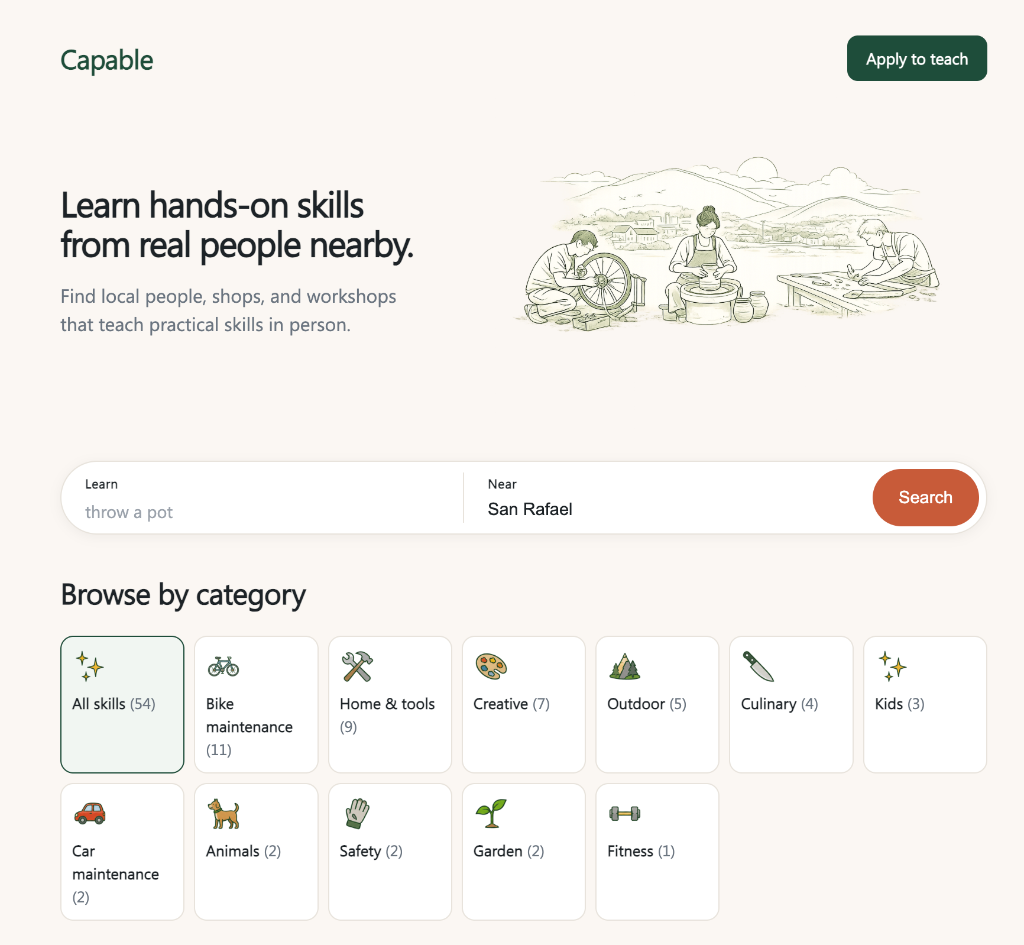
Marketplace × Local
Capable
A free, skill-first directory of local, in-person, hands-on classes — and the early signals that real people want it.

Brand & Web Strategy
JP Events
Microcopy-led redesign for a South Asian wedding planning firm.

E-Commerce
Beauty Box
Subscription box landing page and onboarding for Macy's.

iOS & Android
Mobile Checkout
Scan items and complete purchases directly within Macy's mobile app.